


In an era of rapid technological disruption, shifting global dynamics, and complex social challenges, universities are re-examining not only what they teach, but how and why they teach it. At The Hang Seng University of Hong Kong (HSUHK), this shift has taken concrete form with the launch of the FuturEdge Programme in the 2025-26 academic year — a major revamp of the Common Core Curriculum and a bold advancement of its unique “Liberal + Professional” education model.
“More than a curricular update, FuturEdge represents a philosophical shift at HSUHK,” says Professor Simon S M Ho, President of HSUHK. “It moves beyond the traditional discipline-based structure and distribution model of general education towards a future-oriented framework designed to cultivate three defining attributes in students: caring hearts, global visions, and innovative minds.” These “Future Edges” have been conceived as practical capabilities that students will need to navigate a world where knowledge is abundant, but wisdom, adaptability, and ethical judgement are increasingly scarce, President Ho adds.
From breadth to purpose
For over a decade, HSUHK’s Common Core Curriculum followed a traditional model, distributing learning across humanities, social sciences, and scientific disciplines. While this approach successfully fostered intellectual breadth, it became increasingly clear that rigid disciplinary divisions were no longer adequate for preparing students to address the complex, interconnected challenges of today’s world.
What sets FuturEdge apart is its shift in focus — from what students learn to how they learn. Dr Wong Muk-yan, Director of the Common Core Curriculum and Associate Professor in the Department of Social Science, explains that in the age of AI, simply memorising facts has limited value. “Delivering information and asking students to remember it is pointless,” he says, “because students can instantly access answers online or through AI tools.”
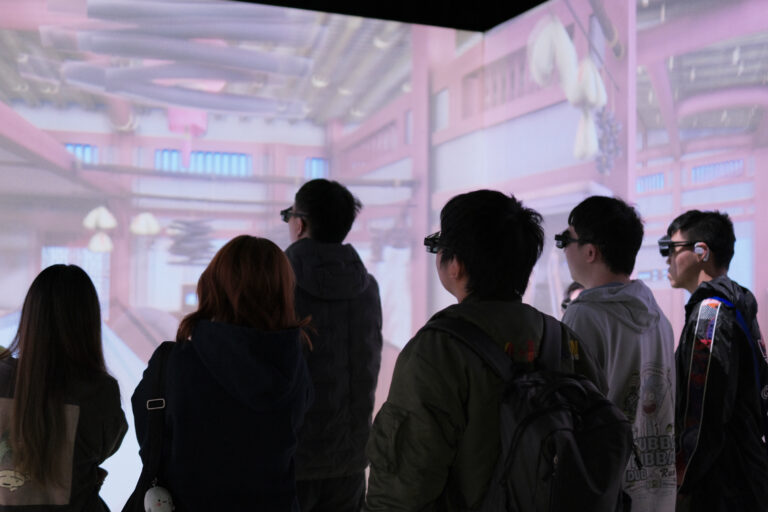
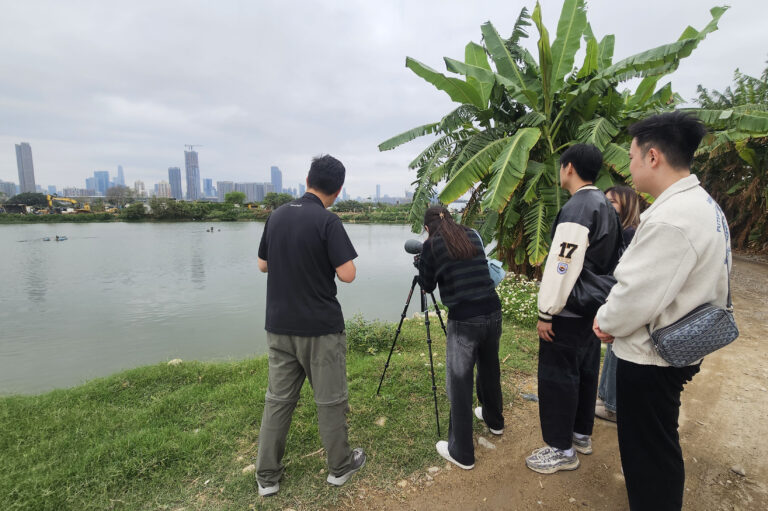
Instead, FuturEdge emphasises experiential learning — learning by doing. In social responsibility modules, for example, students engage directly with communities, visiting elderly centres or minority groups to understand real societal issues and explore how they can contribute. In creativity modules, they move beyond theory to hands-on creation, such as composing music with AI, producing short dramas, or conducting science experiments.
At its core, the FuturEdge Programme replaces a content-driven framework with one centred on capabilities. Drawing inspiration from philosopher Amartya Sen’s capability approach, it focuses on what students are able to do and to become.
As Dr Wong puts it, “University education should not be limited to job preparation,” emphasising that a career is just one dimension of life. “The deeper purpose of education lies in equipping students with the intellectual and moral resources to navigate multiple possibilities in a fast-changing and uncertain world.”
The three future edges
At the heart of the FuturEdge Programme are three thematic clusters, each corresponding to a key dimension of humanity.
Human Development and Social Responsibility, focuses on nurturing empathy, ethical reasoning, and civic engagement. Students are encouraged to understand the social, economic, and cultural forces shaping human lives, and to develop a sense of responsibility towards others — grounding “caring hearts” as informed and active concern rather than simply sentiment.
Cultural Diversity and Glocal Awareness, addresses the need for a “global vision”. In an interconnected yet fragmented world, students must learn to navigate cultural differences, recognise the interplay between global trends and local realities, and engage constructively across boundaries.
Creativity, Technoscience, and Digital Competence, speaks to the cultivation of an “innovative mind”. It emphasises creative thinking, technological literacy, and the ability to harness scientific knowledge for problem-solving. This cluster does not treat technology as an isolated domain, but as something deeply intertwined with human values and societal needs.
These clusters are intentionally interconnected. For instance, a project on AI might simultaneously raise ethical questions, draw on global perspectives, and require creative problem-solving. This integrated approach reflects the University’s and the programme’s commitment to transdisciplinary learning.
Innovative assessments
Assessment, too, is reimagined. “Assessment is for learning. Learning is not for assessment,” Dr Wong emphasises. Rather than relying solely on traditional examinations or essays, FuturEdge incorporates innovative approaches such as student-initiated projects and co-designed evaluation criteria. Students are encouraged to take ownership of their learning, defining what constitutes quality work and reflecting on their own progress.
One particularly innovative model is the BEAM framework — Bot-Enhanced Assessment for Meta Learning — which integrates AI tools into the assessment process. Students collaborate with peers and instructors to design rubrics, which are then encoded into chatbots capable of providing immediate, personalised feedback. This helps students develop the ability to evaluate their own work — a skill that is essential for any future career.
Technology, society, and self-reflection
Dr Joyce Chan, a Lecturer in the Common Core Curriculum Office, offers insight into how these ideas take shape in practice through her module “Science and Better Life”. Rather than discarding existing content, Dr Chan has reframed it. Topics such as DNA technology, genetically modified food, and stem cells are taught not as abstract scientific concepts, but in relation to real-world applications and ethical considerations.
A central component of the module is a group project in which students design a start-up idea using biotechnology to improve one aspect of the “OECD (Organisation for Economic Co-operation and Development) Better Life Index”. This connects scientific knowledge with social, economic, and environmental concerns, making the learning process both interdisciplinary and personally meaningful.
Equally important is the role of student participation in assessment. Learners help shape marking criteria, engage in peer and self-assessment, and interact with AI tutors tailored to specific topics. Dr Chan notes, “This process encourages students to think critically about what constitutes fairness and quality. It also shifts their perception of assessment from a one-way judgement to a tool for continuous improvement.”
Other interesting FuturEdge subjects that align well with the programme’s emphasis on interdisciplinary learning, ethical reflection, real-world application, and forward-looking skills include “Towards the Future: Metaverse”, “Unlocking the Secrets of Language”, “Decentralised Future: Blockchain” and “Understanding Wikipedia: Skills for the Digital Knowledge Age”.
These modules exemplify FuturEdge’s approach by blending cutting-edge technology with ethical, social, and personal reflection. They encourage students to connect scientific or technological knowledge with broader questions of human well-being, fairness, and responsible innovation, often through project-based or participatory learning.
A strategic transformation
From an institutional perspective, FuturEdge is closely aligned with HSUHK’s broader strategic vision. Professor Jeanne Fu, Vice-President (Learning and Student Experience), places the programme within the University’s ongoing efforts to enhance its Common Core Curriculum and further strengthen its “Liberal + Professional” education model.
“The FuturEdge Programme retains the core values of liberal education — intellectual breadth, critical inquiry, and personal development — while adapting them to the demands of a new era. The programme also introduces diverse pedagogical approaches, from modules conducted in innovation labs and sound studios to the development of Science, Technology, Engineering, the Arts, and Mathematics (STEAM) learning spaces.”
Professor Fu underscores the importance of connecting learning to the broader goal of “bettering humanity”. By encouraging students to examine the interconnectedness between themselves and the world, FuturEdge cultivates not only competence, but also conscience.
Enriching student experiences
While the full impact of FuturEdge will only become apparent over time, its aspirations are already clear. The programme seeks to leave students not just with knowledge, but with experiences that resonate, and moments that shape their perspectives while influencing their choices long after graduation.
Dr Wong Muk-yan emphasises that students may not remember every course they take, but they will remember the experiences that matter. Whether it is working with a marginalised community, engaging in a creative project, or grappling with ethical dilemmas, these experiences form the “dots” that students can later connect in making sense of their lives.
Looking ahead, Professor Jeanne Fu hopes that students will find the modules “fun and inspiring”, and that they will develop the capacity to generate creative solutions to both individual and societal problems. In a future where routine tasks are increasingly automated, she notes that it is precisely these human capacities that will remain indispensable.