
Young people today navigate smartphones, social media and video platforms with ease. Yet technical fluency does not always equal confidence when communicating through a camera. For second-language (L2) speakers, digital presentations can heighten anxiety, complicate eye contact, and limit effective use of gestures.
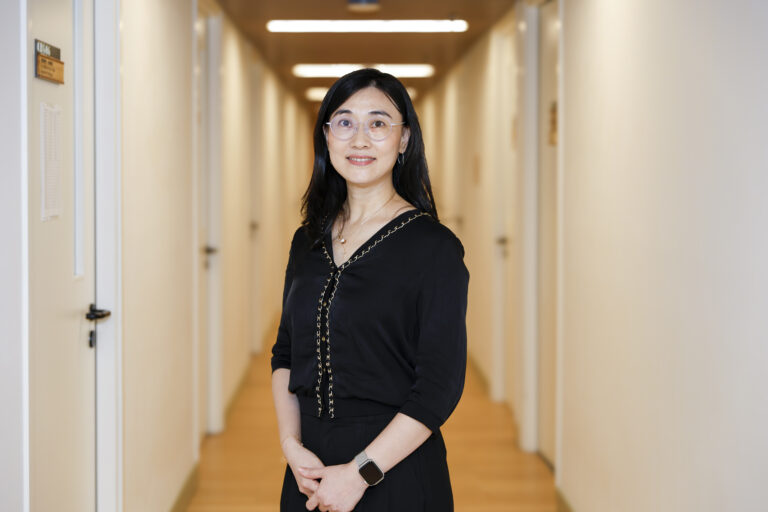
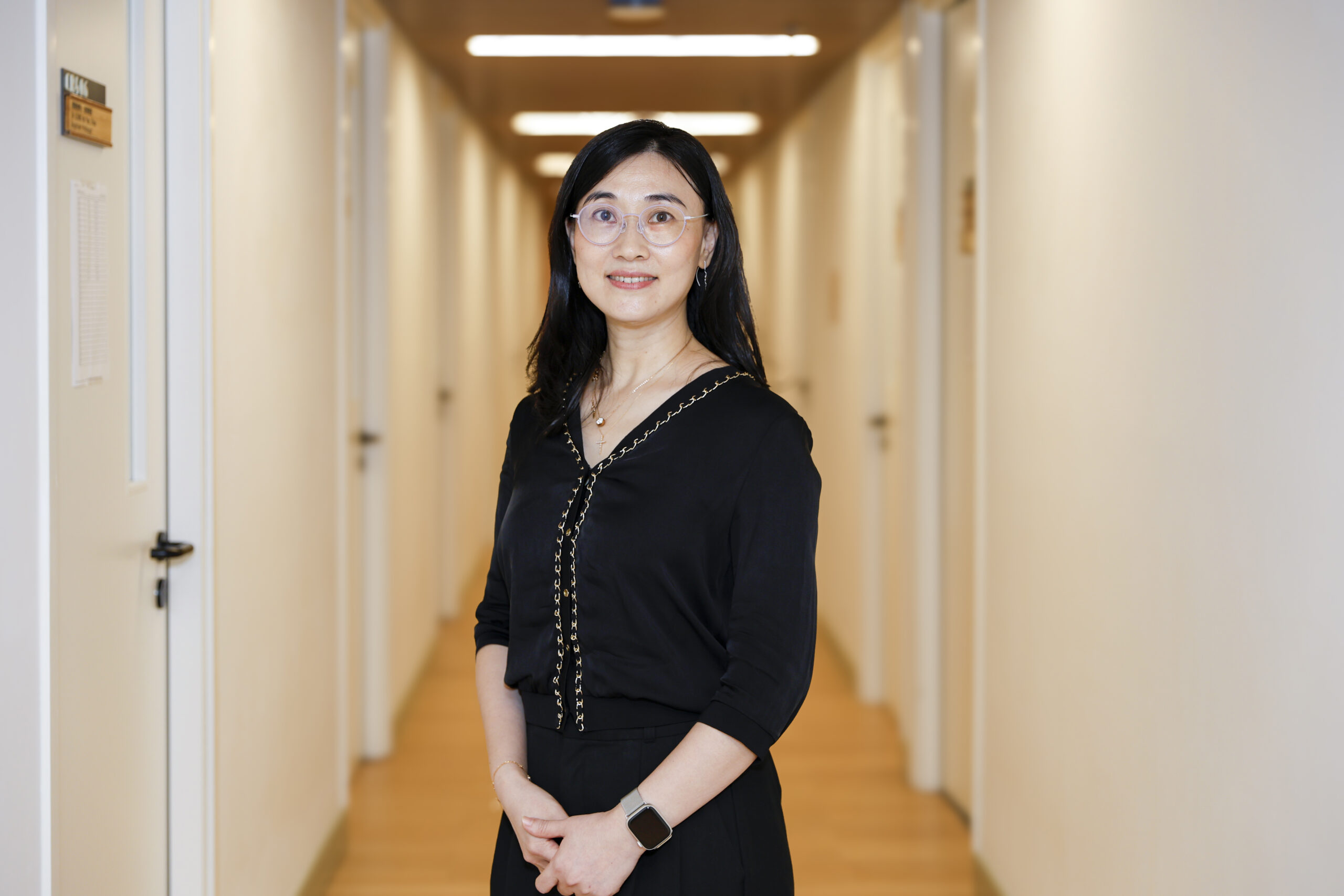
The study “Digital oratory: a multi-data analysis of L2 speakers’ public speaking anxiety and nonverbal speech performance in digital contexts”, by Dr Michelle Huang, Assistant Professor in the Department of English at HSUHK, and her collaborators, addresses these challenges. Published in the international journal ReCALL (Volume 38, Issue 2), the research explores how public speaking anxiety influences nonverbal performance online.
The study revealed cognitive anxiety as the strongest concern (mean score 3.54 on a 5-point scale), followed by physiological anxiety (3.35). Technical anxiety scored markedly lower at 2.02. Students felt comfortable with equipment, yet this confidence did not fully transfer to on-camera delivery.
“The most striking finding was the mismatch between students’ perceptions and their actual observed performance,” Dr Huang noted. In the pre-task survey, behavioural anxiety reflected in eye contact, facial expression, posture, and gesture, was not perceived as high as cognitive and physiological anxiety. Yet, eye contact received the lowest performance scores, with posture and gestures also requiring attention. The post-task interviews further confirmed that 85% of the 20 interviewees identified eye contact as a challenge and 75% mentioned gestures.
Interestingly, most students found digital presentations less stressful than face-to-face ones. Eighteen of the 20 participants preferred recorded formats, valuing the chance to rehearse, pause, restart and select the best recording. This sense of control reduced pressure.
However, Dr Huang emphasises that lower stress does not mean anxiety disappears. “Digital presentations change the profile of speaking anxiety rather than eliminating it.” Although the camera removes a live audience, it does not remove the feeling of being evaluated. Students may still worry about language, accent or competence, and the ability to replay recordings can intensify self-scrutiny, sometimes triggering physical responses such as tension or a faster heartbeat.
These insights position digital oratory as a distinct and teachable skill. Dr Huang recommends that teachers explicitly address camera-based eye contact and gestures. Students can practise looking naturally towards the screen rather than fixing rigidly on the lens, and position the camera to capture the upper body so purposeful gestures remain visible. Recording itself becomes a powerful learning tool through a “record- review-refine” cycle, allowing students to assess their delivery, receive feedback and improve.
The relevance extends well beyond an academic setting. Video interviews, online meetings, webinars, pitches and international collaboration all demand strong digital-oratory skills. For L2 speakers, language proficiency alone is no longer enough. Effective global communication also requires audience awareness, nonverbal competence, intercultural sensitivity and technical control. As Dr Huang observes, “The goal should be intelligibility, credibility and meaningful audience connection—not imitation of a narrowly defined native- speaker model.”
The findings are already shaping teaching at HSUHK, where digital speaking is treated as a distinct communicative genre and recording forms part of the learning process rather than serving solely as assessment. Looking ahead, Dr Huang plans to examine how verbal choices interact with gaze, gesture, facial expression and voice, and to conduct larger comparative studies on the impact of explicit digital- oratory training, including the role of AI.